

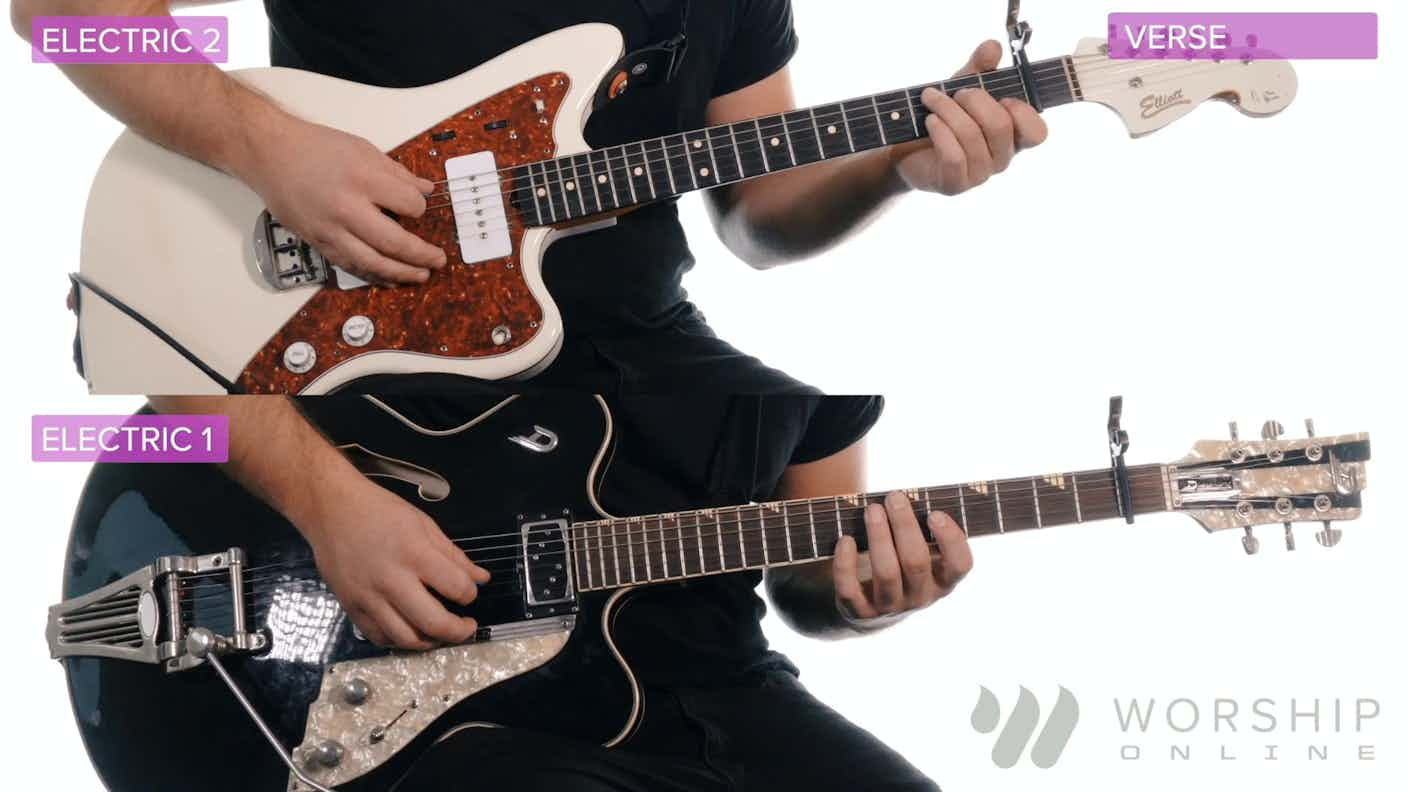
INTRO
VERSE 1
See the Lamb
The spotless sacrifice
The wage our sin required
God Himself provided
The spotless sacrifice
The wage our sin required
God Himself provided
VERSE 2
See the Man
Choose the cross of Calvary
Nails of our iniquities
Punished and rejected
Choose the cross of Calvary
Nails of our iniquities
Punished and rejected
CHORUS
Holy, holy
You are the one and on-ly
Son most worthy
Proof of the Father's love
You are the one and on-ly
Son most worthy
Proof of the Father's love
TURNAROUND
VERSE 3
See the joy
That was set before His eyes
His descendants justified
We'll live with Him forever
That was set before His eyes
His descendants justified
We'll live with Him forever
VERSE 4
See the throne
At the center of the saints
He is risen and He reigns
Forever He's exalted
At the center of the saints
He is risen and He reigns
Forever He's exalted
CHORUS 2X
Holy, holy
You are the one and on-ly
Son most worthy
Proof of the Father's love
You are the one and on-ly
Son most worthy
Proof of the Father's love
TURNAROUND
BRIDGE 1
You deserve all Your glory
You deserve all Your praise
You endured and You conquered
Name above every name
You deserve all Your praise
You endured and You conquered
Name above every name
BRIDGE 2
You deserve all Your glory
You deserve all Your praise
You endured and You conquered
Name above every name
You deserve all Your praise
You endured and You conquered
Name above every name
BRIDGE 3
You deserve all Your glory
You deserve all Your praise
You endured and You conquered
Name above every name
You deserve all Your praise
You endured and You conquered
Name above every name
CHORUS 2X
Holy, holy
You are the one and on-ly
Son most worthy
Proof of the Father's love
You are the one and on-ly
Son most worthy
Proof of the Father's love
BRIDGE 4
You deserve all Your glory
You deserve all Your praise
You endured and You conquered
Name above every name
You deserve all Your praise
You endured and You conquered
Name above every name
BRIDGE 5
You deserve all Your glory
You deserve all Your praise
You endured and You conquered
Name above every name
You deserve all Your praise
You endured and You conquered
Name above every name
CHORUS
Holy, holy
You are the one and on-ly
Son most worthy
Proof of the Father's love
You are the one and on-ly
Son most worthy
Proof of the Father's love
ENDING
One And Only - In the Bible [Verses & Devotional]
When I listen to "One And Only" by TAYA, I'm struck by how simply and powerfully the song points us to two truths at once: the sacrificial love of Jesus and the triumphant kingship that follows that sacrifice. The lyrics move us from the cross to the throne with the steady confidence of someone who has seen the gospel story in full. That arc is richly biblical — and if we walk through the song line by line with Scripture beside us, we find a conversation between worship and theology that gently but urgently calls us to live differently.
The opening image — "See the Lamb, the spotless sacrifice, the wage our sin required, God Himself provided" — echoes the prophetic and apostolic witness to Christ as the spotless Lamb. Isaiah’s suffering servant is described as led like a lamb to the slaughter (Isaiah 53), and John the Baptist points to Jesus as “the Lamb of God, who takes away the sin of the world” (John 1:29). Peter picks up that same image when he tells believers they were ransomed “with the precious blood of Christ, like that of a lamb without blemish or spot” (1 Peter 1:18–19). The lyric’s plain declaration — that the “wage our sin required” was provided by God — rings with Romans 5:8 and 1 John 4:9–10: the cross is both divine provision and the clearest proof of the Father’s love. When the song calls Jesus “Son most worthy” and “proof of the Father’s love,” it is echoing the gospel testimony that the incarnation and sacrifice reveal God’s love in tangible, costly form (John 3:16; Romans 5:8).
“See the throne at the center of the saints / He is risen and He reigns / Forever He’s exalted” turns our gaze from suffering to sovereignty. The New Testament proclaims that the crucified Christ was raised and enthroned (Acts 2:33–36; Ephesians 1:20–22). Revelation habitually praises the Lamb who, though slain, now sits at the center of worship (Revelation 5:12–14). Philippians 2:9–11 brings the two together: because he humbled himself and was obedient to death, God exalted him and gave him a name above every name. Worship of the risen, reigning Christ is therefore both response and recognition: he is worthy because he has triumphed, and worship is the fitting human posture before his lordship.
Practically, hearing this song should stir thanksgiving (because the cross proves the Father’s love), repentance (because the wage of sin is real and was paid), hope (because he conquered death and reigns), and obedience (because a King who loves calls us to follow). It challenges the comfortable parts of our faith: Do we worship a Savior whose suffering we truly understand? Do we live under the authority of a risen Lord whose reign affects how we work, relate, and suffer? The song’s pastoral heartbeat is simple — behold Jesus, respond with worship, and let the reality of his sacrifice and reign reshape how you live.
So let me leave you with a question to sit with this week: If Jesus is both the spotless Lamb who paid for your sin and the exalted King who now reigns, what one area of your life would look different today if you truly lived as though his sacrifice is your only hope and his rule is your greatest allegiance?